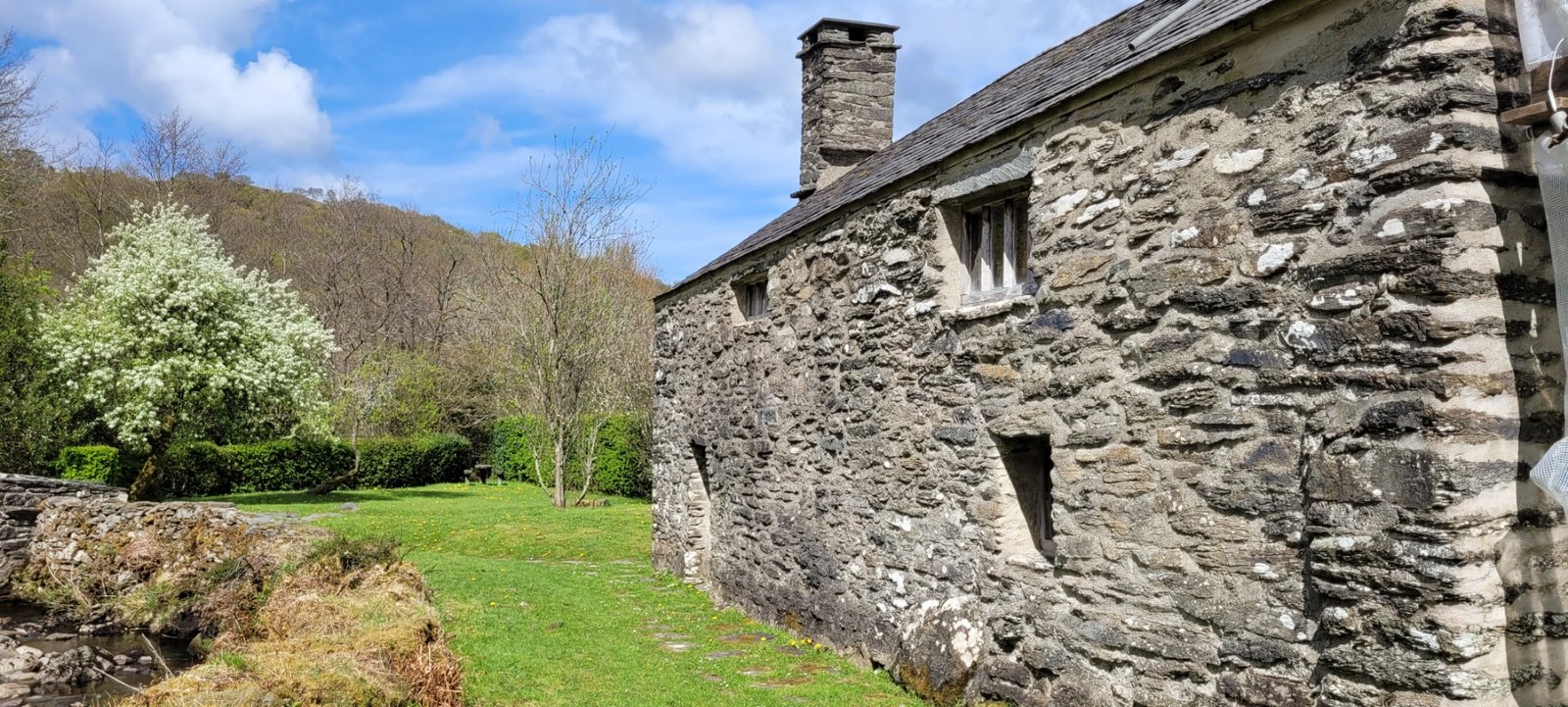
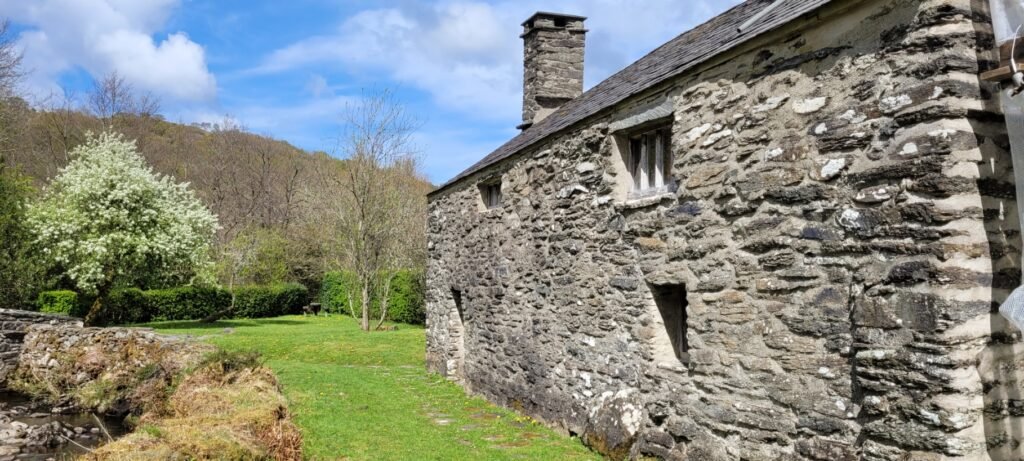
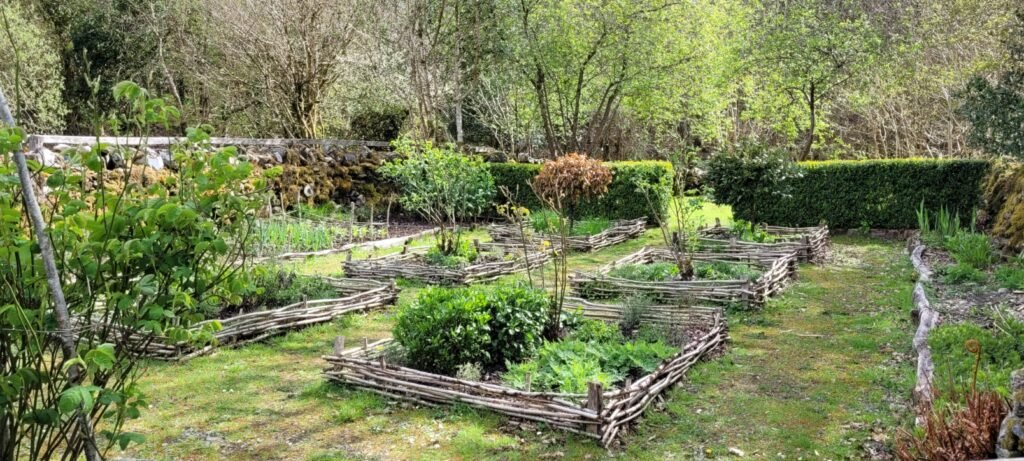
Last spring, I spent a quiet morning at Ty Mawr near Betws‑y‑Coed. The valley was just beginning to wake — blossom on the trees, soft light on the stonework, and the steady movement of the stream cutting through the grass. The buildings stood as they have for centuries: weathered, dignified, and deeply rooted in the land. Nearby, a small garden of raised beds and woven fencing added a sense of care and continuity, as if the past and present were tending the same soil.
A Landscape Shaped by Language
This part of Eryri holds more than natural beauty. It carries the memory of a cultural turning point: the first full translation of the Bible into Cymraeg in 1588. William Morgan’s translation didn’t simply bring scripture into the language of ordinary people — it stabilised Welsh itself. It gave families a shared written form of the language they spoke in chapels, kitchens, farmyards, and places just like Ty Mawr.
For many communities, that translation became the anchor of literacy, worship, and identity. It allowed Welsh to flourish as a language of faith, learning, and everyday life at a time when many minority languages across Europe were losing ground.
Why This Matters for Genealogy
For genealogists, the 1588 Bible is more than a historical milestone — it’s a practical foundation for the records we work with today.
- Parish registers in Wales show remarkable continuity of names and spellings.
- Chapel culture, strengthened by Welsh‑language scripture, shaped community life for centuries.
- Literacy in Welsh helped preserve local surnames, place‑names, and family stories.
- The translation created a linguistic thread that runs through the documents we read, the gravestones we interpret, and the oral histories we record.
When we trace a family through these valleys, we’re not just following names on a page — we’re following a language that held communities together.
Standing in the Quiet
As I stood at Ty Mawr, surrounded by blossom, stone, and the soft hum of spring, I found myself thinking about the families who lived here long before us. People who prayed in Welsh, worked the land, raised children, and passed on their stories in the rhythms of their own language.
Genealogy isn’t only about documents.
It’s about understanding the land, the language, and the quiet cultural revolutions that shaped the lives we trace.
Further Reading
National Library of Wales – “The 1588 Welsh Bible and Bishop William Morgan”
A clear, authoritative overview of Morgan’s translation, its commissioning, and its cultural impact. Excellent for understanding how the 1588 Bible stabilised written Welsh and shaped literacy across Wales.
Welsh Histories – “William Morgan & the 1588 Welsh Bible”
A narrative account of Morgan’s life, the political and religious pressures of the period, and the long-term influence of his translation. Useful for readers who want a more story‑driven introduction.
Wikipedia – “Bible Translations into Welsh”
A broad timeline of Welsh-language scripture, including earlier translations by William Salesbury and later revisions. Helpful for situating Morgan’s work within the wider history of Welsh biblical scholarship.
Geiriadur Prifysgol Cymru (GPC)
The definitive historical dictionary of Welsh. Valuable for exploring how Morgan’s linguistic choices influenced later Welsh usage and how key biblical terms evolved over time.
BBC Cymru Fyw – Articles on Welsh Language History
Accessible pieces on Welsh literacy, chapel culture, and the social role of scripture. Ideal for readers who want short, engaging context without diving into academic texts.
Leave a Reply